Enhance Your Dining Room with a Japandi Wood Pendant Light
So, you’re looking to upgrade your dining area and considering a Japandi wood pendant light? Good call. These lights are fantastic for adding warmth, style, and a sense of calm to your space. They blend the minimalist, natural aesthetics of Japanese design with the cozy, functional side of Scandinavian style, resulting in a look that’s both chic and incredibly inviting. Essentially, you’re getting understated elegance and practical illumination all in one.
It’s more than just a light Kensulighting fixture; it’s a statement piece that speaks to a specific design philosophy. Japandi style is all about balance, harmony, and thoughtful design.
A Fusion of Two Beloved Styles
Japandi takes the best bits of Japanese wabi-sabi and Scandinavian hygge. From Japan, you get the appreciation for natural materials, craftsmanship, and a sense of calm simplicity. From Scandinavia, it’s all about comfort, functionality, and warm minimalism. A Japandi wood pendant light, therefore, isn’t just about illuminating a room; it’s about creating an atmosphere.
Emphasizing Natural Materials
Wood is the cornerstone of Japandi design, and for good reason. It brings an organic warmth and texture that instantly makes a space feel more grounded and welcoming.
The Beauty of Bare Wood
Typically, you’ll find light-colored woods like birch, ash, or maple, or sometimes slightly darker, richer tones like oak. The beauty lies in the exposed grain and natural imperfections – it’s not about polished perfection, but rather the intrinsic character of the material. This natural quality creates a subtle focal point without being overpowering.
Handcrafted Details
Many authentic Japandi pieces, including pendant lights, feature subtle handcrafted elements. This could be a unique joinery technique, a carved detail, or a carefully sanded finish. These details add to the piece’s story and value.
Minimalist Yet Warm Design
One of the great things about Japandi is its ability to be minimalist without feeling cold or sterile.
Clean Lines and Simple Shapes
Expect clean, uncluttered forms. Think geometric shapes like cylinders, cones, or broader, shallower bowls. The lack of excessive ornamentation is purposeful, allowing the material and form to speak for themselves. This simplicity makes them incredibly versatile.
Soft, Diffused Lighting
The design often incorporates a way to diffuse the light, creating a softer, more ambient glow rather than harsh, direct illumination. This is crucial for creating a relaxing dining atmosphere.
Choosing the Right Wood Pendant for Your Dining Room
With so many options out there, it can feel a bit overwhelming. Here’s a breakdown of what to consider to make sure you pick the perfect one for your space.
Size and Scale Considerations
This is probably the most critical factor. A pendant light that’s too small will get lost, and one that’s too large will dominate the room.
Over Your Dining Table
As a general rule, the diameter or width of your pendant light should be about half to two-thirds the width of your dining table. This provides good illumination for the table surface without feeling cramped.
Ceiling Height Matters
If you have lower ceilings (under 8 feet), you’ll want a fixture that doesn’t hang down too far. Flush-mount or semi-flush-mount Japandi styles exist, but for a true pendant look, ensure there’s at least 30-36 inches clearance between the bottom of the fixture and the tabletop. Higher ceilings can accommodate longer suspension lengths and larger fixtures.
Multiple Pendants vs. Single Statement Piece
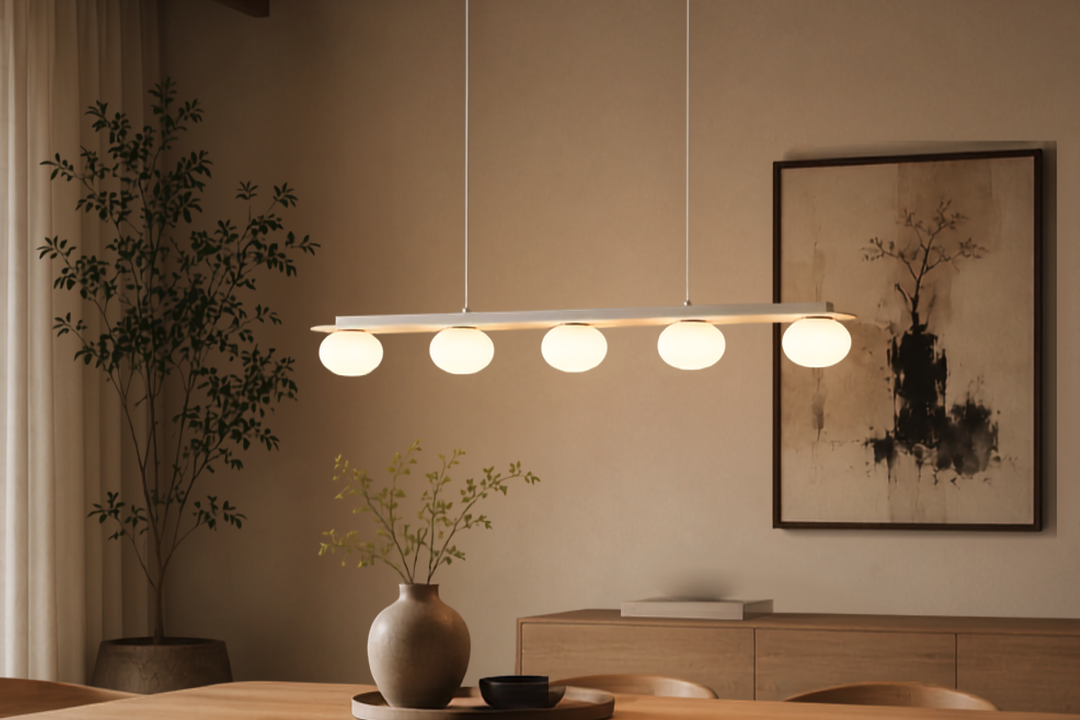
For longer tables, sometimes a cluster of smaller pendants or a linear multi-light fixture works better than a single large one. This allows for more even light distribution and a more dynamic look. Think about how many light sources you need to adequately light your table without glare.
Wood Type and Finish
The type of wood and its finish will significantly impact the light’s overall aesthetic and how it complements your existing decor.
Light Woods for a Brighter Feel
Birch, maple, and light oak are common choices. They contribute to a brighter, airier feel, which is perfect for smaller dining rooms or spaces where you want to maximize light. They pair beautifully with neutral color palettes.
Darker Woods for Depth and Contrast
Walnut or darker stained oak can add a richer, more sophisticated touch. These work well in dining rooms with a darker color scheme or where you want to create a sense of grounded elegance. They can also create a striking contrast against lighter walls.
Natural vs. Stained vs. Painted Accents
Most Japandi wood pendants celebrate the natural wood. Some might have a clear, matte sealant to protect the wood without altering its appearance. Occasionally, you might find subtle painted accents (e.g., a matte black detail) that still adhere to the minimalist principle. Avoid anything too glossy or overly embellished.
Light Source and Bulb Type
While the fixture is important, the light it casts is equally so. This impacts both functionality and mood.
Dimmable for Versatility
Absolutely essential for a dining room. You want bright light for casual meals or cleaning, and soft, warm light for intimate dinner parties. Ensure both the fixture and the bulbs are dimmable.
Warm White Light (2700K-3000K)
This color temperature is crucial for creating a cozy, inviting atmosphere. Anything higher (cooler) will make your food look less appealing and the room feel less welcoming. Look for LED bulbs that mimic the warm glow of traditional incandescent bulbs.
Bulb Exposure
Consider if the bulb itself will be visible. If so, an attractive filament bulb or an opaque bulb might be preferable. Many Japandi designs cleverly conceal the bulb or use diffusers to prevent harsh glare.
Integrating Your Japandi Pendant into Your Dining Space
A Japandi pendant light isn’t just an isolated piece; it needs to work in harmony with the rest of your dining room.
Harmonizing with Existing Decor
The beauty of Japandi is its adaptability. It can complement various styles, from strictly modern to slightly more rustic.
Color Palette Cohesion
If your dining room has a neutral palette (whites, grays, creams, muted greens or blues), a Japandi pendant will fit right in. If you have bolder colors, use the pendant to introduce a calming, natural element that balances the vibrancy.
Material Mix
Think about the other materials in your dining room. Wood, linen, ceramic, and subtle metal accents all pair well with a wooden pendant. Avoid overly ornate or shiny materials that might clash with the understated aesthetic.
Complementary Furniture and Accessories
Extend the Japandi aesthetic through your furniture and decorative elements.
Simple Dining Table and Chairs
A solid wood dining table with clean lines, perhaps in a similar wood tone to your pendant, would be ideal. Chairs made from wood, woven elements, or with simple upholstery would complete the look.
Thoughtful Accessories
Less is more. A simple ceramic vase with a few dried grasses, a linen table runner, or minimalist artwork on the walls can reinforce the Japandi vibe without clutter. Avoid busy patterns or excessive knick-knacks.
Enhancing Ambient Lighting
Your pendant light is likely the primary task light over your table, but it shouldn’t be the only light source in the room.
Layering Light
Include other light sources like wall sconces, floor lamps, or even small table lamps on a sideboard. These additional sources create a layered lighting scheme that adds depth and warmth, preventing harsh shadows.
Dimmer Switches are Your Friend
We mentioned this earlier, but it’s worth reiterating. Dimmers on all your light sources allow you to adjust the mood for any occasion – from bright task lighting to a soft, romantic glow.
Installation and Maintenance Tips
Getting your new pendant up and keeping it looking good requires a bit of practical knowledge.
Professional Installation Recommended
While some DIY enthusiasts might tackle light fixture installation, it’s generally best to hire a qualified electrician. This ensures the fixture is safely wired, properly supported, and up to code.
Safety First
Dealing with electricity always carries risks. An electrician knows how to safely cut power, test circuits, and make secure connections. They’ll also ensure the mounting hardware is adequate for the weight of your new fixture.
Optimal Placement
An electrician can help you determine the exact centering of the fixture over your table, taking into account any ceiling joists or other structural elements that might affect placement. They can also adjust the hanging length perfectly.
Keeping Your Wood Pendant Looking Its Best
Wood is a living material, and a little care goes a long way in preserving its beauty.
Regular Dusting
Like any fixture, dust will accumulate. Use a soft, dry cloth or a feather duster to gently wipe down the wood and any metal components regularly. Avoid abrasive cleaners.
Wood Care (If Applicable)
If your pendant is made of unfinished or lightly sealed wood, you might consider applying a specific wood conditioner or wax occasionally, especially if you notice it drying out. Always follow the manufacturer’s instructions for any specific care recommendations.
Avoiding Direct Sunlight and Moisture
Prolonged exposure to direct sunlight can cause wood to fade or warp over time. Similarly, excessive moisture can damage it. While a dining room is generally safe, be mindful of these factors if your dining area is highly exposed.
Final Thoughts on Your Japandi Dining Room
A Japandi wood pendant light is more than just illumination; it’s an investment in the atmosphere and aesthetic of your dining room. It speaks to a desire for simplicity, quality, and a profound appreciation for natural beauty. By carefully considering its size, the type of wood, and how it integrates with your overall design, you’ll create a dining space that feels both elegant and wonderfully inviting. Embrace the calm, thoughtful design that Japandi offers, and enjoy your beautifully illuminated meals.